Retro Vintage Bedroom Furniture: Your Digital Design Toolkit
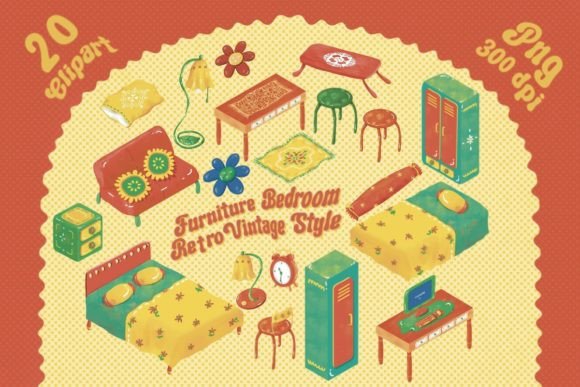
There’s a certain warmth to mid-century furniture—the gentle curve of a chair leg, the solid presence of a wooden wardrobe, the soft glow of a ceramic lamp on a nightstand. Capturing that nostalgic, lived-in aesthetic for modern design projects used to require either a photographer or advanced illustration skills. Now, there’s a more direct path. The Furniture Bedroom Retro Vintage Style isometric collection offers a complete digital toolkit for building that cozy, nostalgic atmosphere from scratch.
This isn't just a random set of images. It’s a carefully curated bundle of 20 individual design assets, each rendered in a consistent isometric perspective with a transparent background. You get the essential pieces: a sturdy bolster pillow, a classic coffee table, an iconic chair, textured cushions, a vintage wall clock, a sculptural lamp, a patterned carpet, a spacious wardrobe, a functional desk, a matching nightstand, and a welcoming bed pillow. Each item is delivered as a high-resolution PNG file at 6000x6000 pixels and 300 dpi, ensuring crisp results whether you’re designing a tiny web icon or a large-format print poster.
More Than Clipart: A System for Visual Storytelling
Think of this collection as a set of premium building blocks for visual narratives. The isometric style gives each piece a tangible, three-dimensional quality without the complexity of full perspective. This makes them incredibly versatile. You’re not just placing a chair; you’re placing a character in a scene. The vintage styling—think tapered legs, rounded forms, and warm, muted color palettes—injects instant personality and a sense of history into any project.
Where does this style truly shine? Its strength lies in projects that aim for a human, approachable, and slightly nostalgic feel. It’s perfect for blog graphics that need to break up text and add visual interest, especially for topics like interior design, DIY projects, or cozy lifestyle content. The assets are ideal for creating engaging social media graphics for platforms like Pinterest or Instagram, where a stylized room vignette can stop the scroll. For small business owners, particularly those in vintage retail, furniture restoration, or home staging, these images can form the foundation of a brand identity—appearing on websites, flyers, and even product packaging to instantly communicate a retro aesthetic.
Practical Applications for Creators and Professionals
The real value of a creative font or asset set is in its application. Let’s move beyond theory. A blogger could use the wardrobe and desk to create a custom header image for a "Home Office Tour" post. A scrapbooker can layer the lamp, carpet, and nightstand to build a unique digital memory page. A marketer designing a flyer for a local vintage market can use the coffee table and chair to create an inviting scene that sets the mood without a single word of copy.
For web design, these elements can break the monotony of standard stock photography. Use the clock as a unique "opening hours" icon or the cushion as a decorative element in a sidebar. In editorial design, like a magazine layout or a PDF brochure, they can illustrate articles or create thematic section breaks. The high resolution and transparent backgrounds make them simple to drop into any design software, from professional suites like Adobe Illustrator to accessible platforms like Canva.
Integrating Assets into Your Design Workflow
Adopting a new design asset like this requires a practical approach. First, consider your project’s core personality. Does it call for warmth, nostalgia, and a handcrafted feel? If yes, the Furniture Bedroom Retro Vintage Style collection is a strong fit. If your project demands sleek, ultra-modern minimalism, it might clash.
Next, think about font pairing. The vintage furniture graphics have a distinct voice. Pair them with typefaces that complement rather than compete. A clean, geometric sans serif font can provide a modern counterpoint, keeping the design from feeling dated. Alternatively, a slightly textured serif font can enhance the nostalgic feel for a more cohesive, period-inspired look. Avoid overly ornate script fonts that might reduce readability when used with these detailed images.
Finally, use them with intention. Don’t just scatter pieces randomly. Build a scene. Think about composition, balance, and visual flow. The isometric grid is your friend here—it naturally helps create orderly, harmonious arrangements. Start with a focal piece, like the bed or wardrobe, and build around it with supporting items. This methodical approach transforms a collection of PNGs into a compelling visual story that feels professional and cohesive, strengthening your project’s overall brand perception and audience engagement.